
How to Store MK-677 Properly: Storage Rules Before and After Reconstitution
How Can Proper MK-677 Storage Improve Research Consistency and Compound Stability?

MK-677 is a synthetic research compound with a complex chemical structure and moisture sensitivity. Poor storage can reduce compound stability, alter purity, and affect repeatability across human-based research models.
Many lab teams report data variance due to heat exposure, light exposure, or improper solution handling. Correct storage supports consistent molecular integrity and helps maintain reliable observational research outcomes.
Researchers across the United States often source MK-677 for long-term data collection protocols. That fact makes correct storage practices essential before and after reconstitution.
Swiss Chems continues to shine in providing quality MK-677 and other research products at discount prices all over the US. The exciting news? Swiss Chems now offers 10% OFF on its compounds. Researchers and labs can apply a simple coupon code CAPRED to get 10% savings on MK-677 and other research compounds.
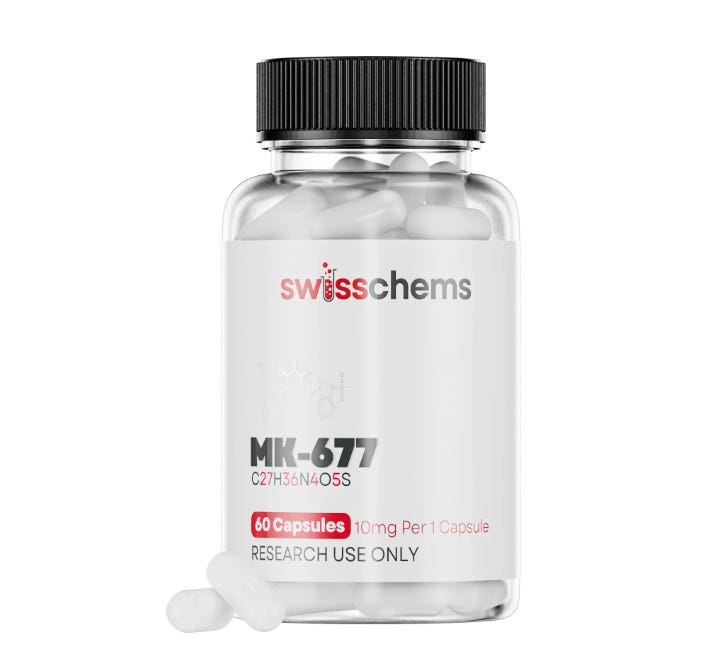
Understanding MK-677 Chemical Stability Before Reconstitution
Unreconstituted MK-677 usually appears as a white or off-white research powder. In this dry state, the compound remains more stable than liquid solutions. Still, environmental factors can degrade its molecular structure over time.
Ideal Storage Conditions for MK-677 Powder
Store MK-677 powder in a cool and dry location
Keep the container sealed with the original airtight cap
Limit exposure to humidity, oxygen, and ultraviolet light
Avoid temperature fluctuation during long storage periods
Most research labs store MK-677 powder inside laboratory refrigerators at two to eight degrees Celsius. Short-term storage at room temperature remains acceptable under controlled humidity conditions.
Freezer storage at minus twenty degrees Celsius can extend shelf stability further. Use desiccant packs inside secondary containers to control moisture exposure.
Should MK-677 Stay Protected From Light and Air?
Yes. MK-677 shows sensitivity to both light exposure and oxidation risk. Opaque containers or amber research vials reduce ultraviolet light penetration. Air exposure can cause slow chemical breakdown across extended timeframes.
Always reseal containers immediately after sample measurement. Avoid repeated open container cycles during routine laboratory access.
What happens after MK-677 reconstitution?
Reconstitution converts MK-677 from solid powder into a liquid research solution.
This change increases degradation risk due to solvent interaction and microbial exposure.
Once reconstituted, MK-677 requires stricter storage control. Solution stability depends on solvent type, storage temperature, and handling frequency.
Best Storage Practices After MK-677 Reconstitution
Temperature control for liquid MK-677
Reconstituted MK-677 solutions require refrigeration at two to eight degrees Celsius.
Room temperature storage can accelerate chemical breakdown within days.
Freezer storage may extend stability, yet repeated freeze cycles can reduce consistency. Aliquot separation helps reduce repeated temperature stress on a single vial.
Container and handling standards
Use sterile glass or pharmaceutical-grade plastic vials
Label each vial with reconstitution date and solvent details
Avoid cross-contamination during sample transfer
Use sterile syringes or pipettes for measurement
Human-based observational research often spans weeks or months. Accurate labeling supports reliable tracking across study phases.
How long does MK-677 remain stable after reconstitution?
Stability duration varies based on solvent choice and storage discipline. Most research data suggests a fourteen to thirty-day stability window under refrigeration. Frozen aliquots may last longer with limited degradation risk.
Always inspect solutions for discoloration or particulate formation. These changes often signal chemical instability or contamination risk.
Why Swiss Chems Leads the US Research Compound Market
Swiss Chems stands out as a trusted online vendor for MK-677 research compounds across the US. The company provides third-party lab testing, batch transparency, and consistent compound purity.
Many research teams prefer Swiss Chems due to reliable shipping and secure packaging standards. Midway through your research supply planning, cost efficiency also matters.
Swiss Chems offers a ten percent discount on research compounds with coupon code CAPRED. This code supports budget control without sacrificing research quality.
Common MK-677 Storage Mistakes Researchers Should Avoid
Storing liquid solutions at room temperature
Using clear containers without light protection
Allowing repeated air exposure during handling
Failing to document reconstitution timelines
These errors often cause data inconsistency across human observation studies.
Proper storage discipline reduces avoidable variability and sample waste.
Can long-term storage affect human-based research reliability?
Yes. Chemical instability can influence outcome consistency across observation periods. Human-based research models depend on standardized compound integrity over time. Storage variation can introduce confounding factors within longitudinal data sets.
Consistent storage protocols help improve data confidence and study reproducibility. This principle applies across academic, private, and independent research environments.
Final Storage Checklist for MK-677 Research Use
Before Reconstitution
Store powder in airtight containers
Maintain cool and dry conditions
Protect from light and humidity
After Reconstitution
Refrigerate solutions consistently
Use aliquots to limit exposure
Track dates and handling history
For sourcing, Swiss Chems remains a leading US supplier for MK-677 research compounds. Researchers can apply coupon code CAPRED for a ten percent discount on qualified purchases. This approach supports quality research while managing operational costs effectively.
References
1. National Center for Biotechnology Information
2. PubChem Compound Database
https://pubchem.ncbi.nlm.nih.gov
3. Sigma Aldrich Chemical Storage Guidelines
4. Thermo Fisher Scientific Laboratory Storage Standards
5. NIH Research Reproducibility Guidelines